

A kitchen island can either blend into the rest of the room or become the main focal point. Some homeowners prefer a fully matching look, while others want contrast through color, finish, or material.
The right decision depends on the size of the kitchen, the layout, the cabinet style, the countertop, and the overall color palette. A matching island can feel calm and cohesive, while a contrasting island can add personality and visual depth.
This guide explains when matching works best, when contrast makes sense, and how to coordinate the island with other design elements. Cabinet Connect of Charlotte can help homeowners explore kitchen cabinets, island finishes, and layout options for a balanced remodel.
Matching Kitchen Island and Cabinets
Matching the island to the surrounding cabinetry creates a simple and cohesive appearance. This approach works especially well in traditional, minimalist, and smaller kitchens where too many different finishes could make the room feel busy.
A matching island can make the kitchen feel more intentional. Using the same door style, finish, and cabinet color helps all parts of the room feel connected.
An exact island match is not always required. The island can use the same general finish while the countertop, lighting, or hardware adds small differences. This keeps the design coordinated without making it feel flat.
In compact kitchens, matching cabinetry can help the room feel larger and less divided. Strong contrast can sometimes make a small layout feel visually broken into separate sections.
A matching design is also a good choice for homeowners who want a timeless look. It is less likely to feel trendy and usually works well with many countertop and backsplash styles.
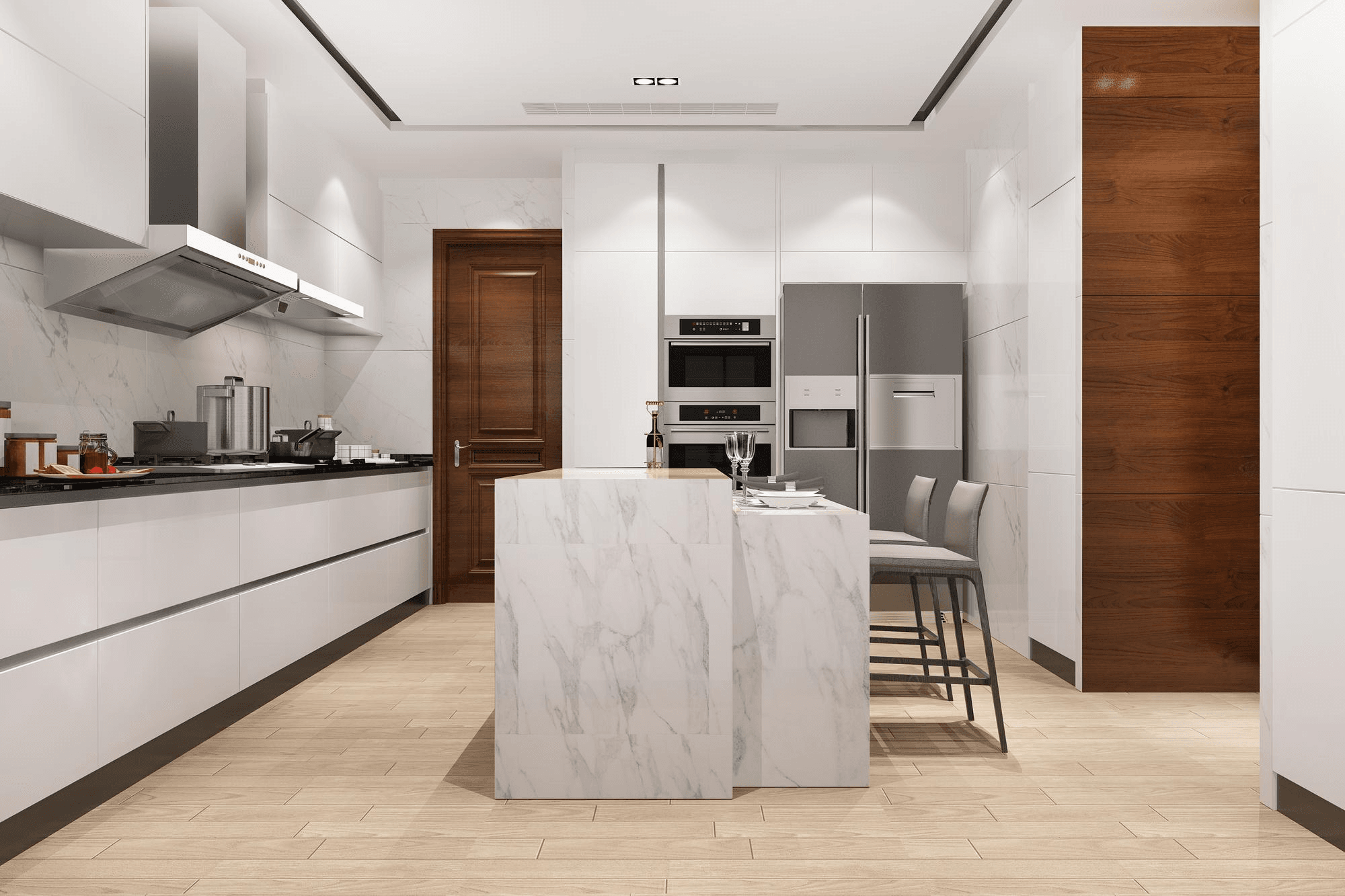
Should the Island Match the Cabinet Color or Countertop?
When the island matches the cabinets, the full kitchen feels unified. This is a strong option when the cabinetry is already the main design feature or when the homeowner wants a calmer appearance.
The island can also coordinate with the countertop instead of the perimeter cabinets. For example, an island base may use a color that connects with the veining or background tone in the stone.
In many kitchens, the island connects several materials. It can help tie together cabinetry, countertops, flooring, backsplash, and hardware. This is especially helpful when the room includes both warm and cool tones.
The best choice is not based on one surface alone. Homeowners should compare the island finish with the perimeter cabinetry, countertop pattern, backsplash, flooring, wall color, and lighting.
A kitchen does not need every element to be the same. The goal is visual balance. A proper island should look intentional, whether it matches closely or creates contrast.
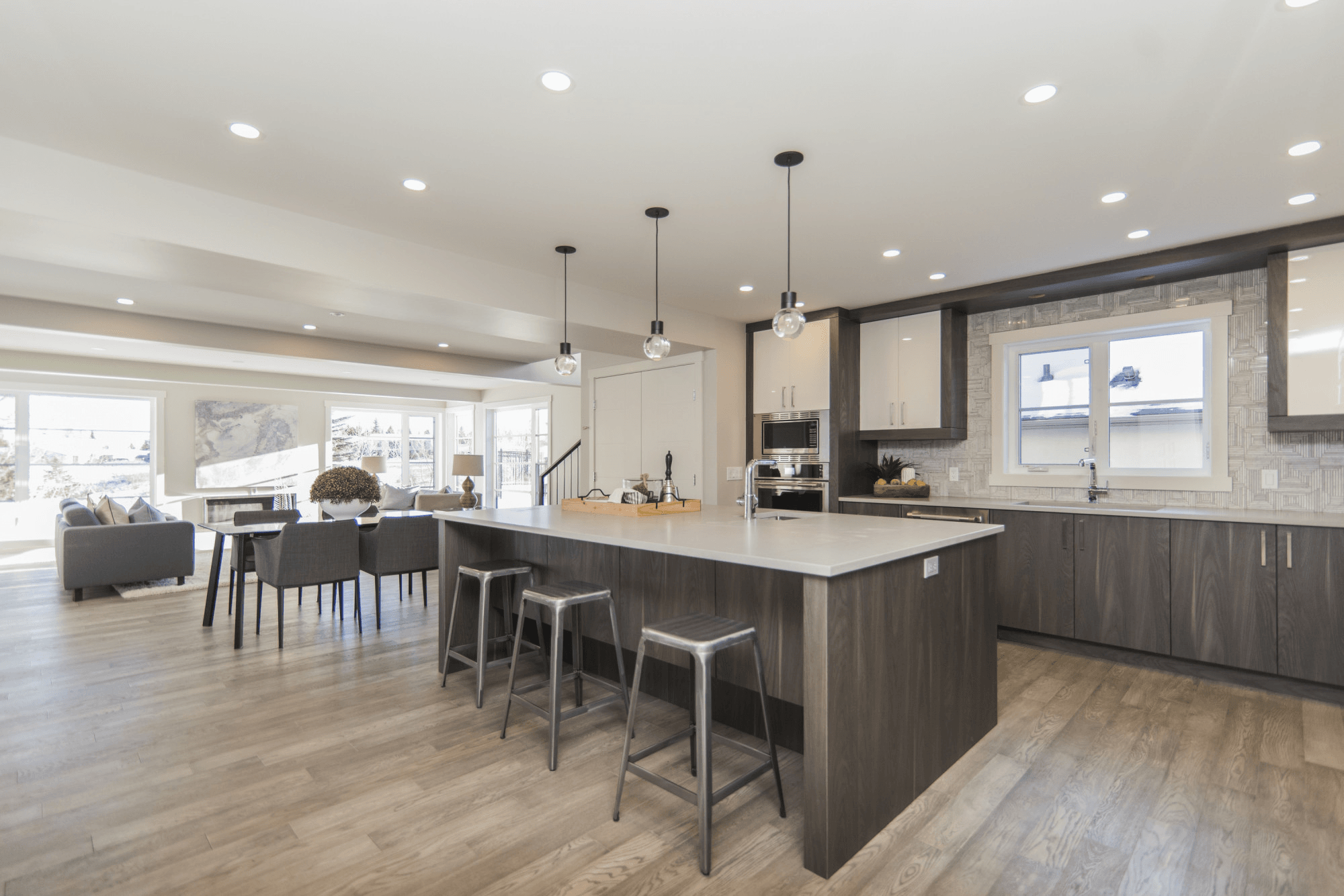
Popular Kitchen Island Color Combinations
White Cabinets With a Wood Island
White perimeter cabinets with a wood island create a warm and natural look. The white keeps the kitchen bright, while the wood adds texture and comfort.
White Cabinets With a Blue Island
A blue island can add color without overwhelming the room. Navy, dusty blue, or blue-gray tones can make the island feel like a polished focal point.
Gray Cabinets With a White Island
Gray cabinetry with a white island creates a softer contrast. This pairing can work well in transitional and modern kitchens, especially with quartz or marble-look countertops.
Cream Cabinets With a Dark Island
Cream cabinets with a dark island can feel classic and elegant. Black, espresso, charcoal, or deep green can add depth while the cream cabinetry keeps the room warm.
Natural Wood Cabinets With a Painted Island
Wood cabinetry with a painted island creates a layered look. A green, navy, black, or soft gray island can add color while still allowing the natural wood to remain important.
Choosing the Right Kitchen Island Color
The best kitchen island color should connect with the rest of the room. It should work with the cabinet finish, flooring, backsplash, and hardware instead of feeling like a random accent.
Other Elements to Coordinate With the Island
Countertops
The countertop can either match the perimeter counters or use a different material for contrast. If the island base is bold, a calmer countertop may keep the design balanced.
Backsplash
The backsplash should support the overall color plan. A simple backsplash often works best when the island already adds strong contrast.
Flooring
Flooring affects how the island color appears. Warm wood floors may make cool cabinet colors feel softer, while gray or tile floors may require more careful coordination.
Hardware
Hardware can help connect different finishes. For example, brass hardware can warm up blue or black cabinets, while matte black hardware can make a light kitchen feel more modern.
Lighting
Pendant lights above the island are part of the design. Their size, finish, and style should support the island rather than compete with it.
Cabinet Connect of Charlotte helps homeowners compare colors, door styles, layouts, and cabinet design options for island projects.
With the right planning, an island can match, contrast, or coordinate beautifully. The best result is a kitchen that feels balanced, functional, and connected from every angle.
